Nitrate is a normal end product of the aquarium nitrogen cycle. Beneficial bacteria first convert toxic ammonia, produced by waste, uneaten food, and other organic material, into nitrite. A second group of bacteria then converts nitrite into nitrate. This process does not mean the aquarium is failing; it means the biological filter is processing waste. However, nitrate remains in the water unless it is removed through water changes, plant uptake, substrate maintenance, or other appropriate methods.
Why Nitrates Actually Matter for Your Axolotl
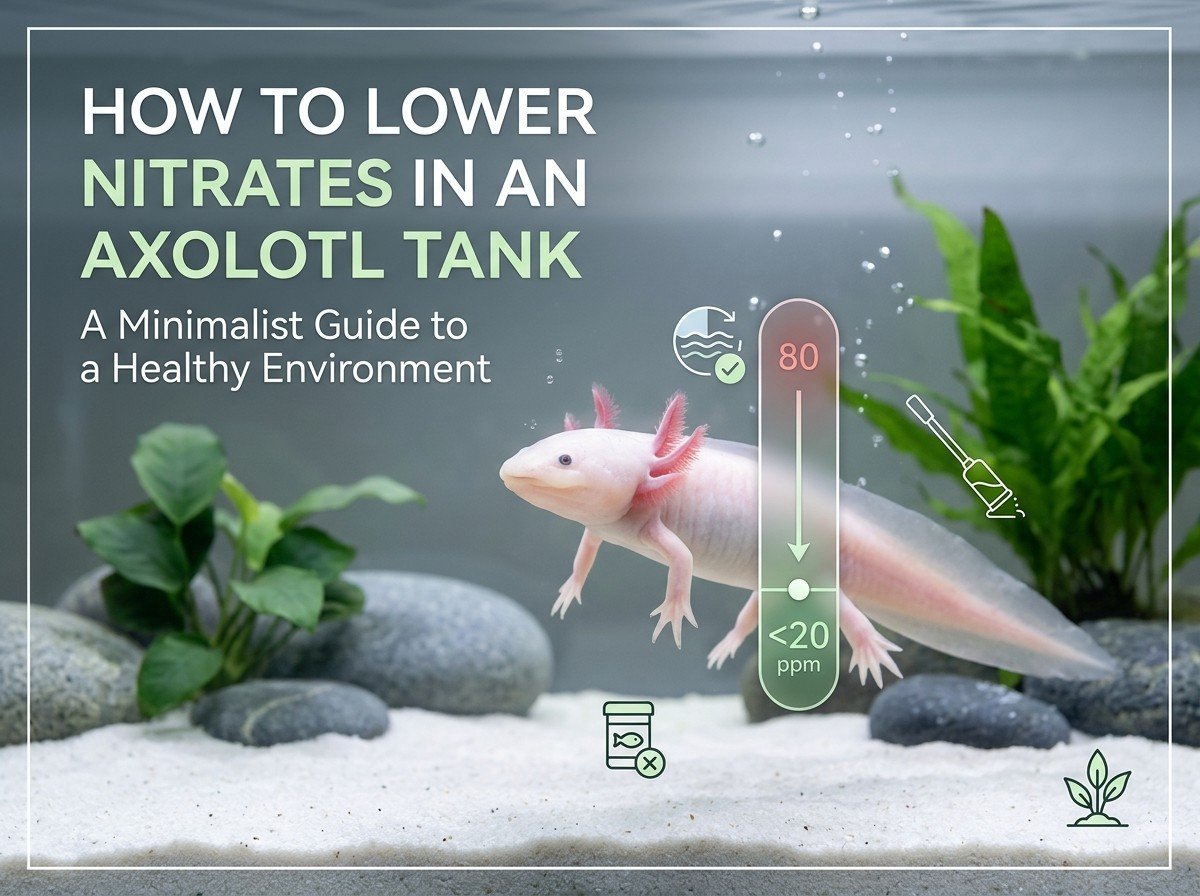
Axolotls are particularly vulnerable to poor water quality because their permeable skin and delicate external gills are exposed directly to the aquarium environment. Although nitrate is considerably less acutely toxic than ammonia or nitrite, prolonged exposure to elevated levels can contribute to stress, reduced appetite, irritation, and general health problems. A commonly used target is to keep nitrate below 20 parts per million (ppm), while maintaining it as low and stable as practical. Persistently high readings require investigation and corrective action rather than being treated as harmless background conditions.
A single high reading does not necessarily indicate a continuing problem. It may reflect a testing error, a recent disturbance, or nitrate already present in the source water. By contrast, a recurring high reading soon after water changes suggests an ongoing cause, such as excessive waste production, insufficient maintenance, overfeeding, overcrowding, or a filter that is immature, disrupted, or overloaded.
Before changing the aquarium, confirm that the result is accurate. Liquid reagents can expire, test strips can be used incorrectly, and nitrate tests often require thorough shaking to mix the chemicals properly. Contaminated test tubes can also distort results. Testing immediately after feeding or maintenance may produce readings that do not represent normal conditions. Test untreated tap water as well as aquarium water, because the supply may already contain nitrate. Record both results over several days to identify a pattern.
Check ammonia and nitrite at the same time. Any detectable amount of either is more urgent than an elevated nitrate reading and may indicate an immature, disrupted, or overloaded biological filter. A calm, consistent testing routine helps distinguish a genuine recurring issue from an isolated or inaccurate result.
Wait, Is That Reading Actually Accurate?
When a nitrate reading is high, first confirm it with a reliable liquid test kit, checking the expiration date, shaking reagents as directed, and repeating the test if the result seems unusual. Test the source water as well. If tap or well water already contains nitrate, a water change may lower the aquarium reading less than expected and the source will require separate treatment or an alternative supply.
The Most Reliable Fix: Increasing Water Changes
For an immediate reduction, prepare dechlorinated water that closely matches the aquarium’s temperature, pH, and hardness. Remove approximately 20–30 percent of the water with a siphon, vacuuming debris from the substrate without disturbing the entire bed. Take out uneaten food, feces, dead plant material, and other visible organic buildup. Refill slowly to avoid stressing the axolotl and recheck the parameters after the water has mixed. Avoid replacing or aggressively scrubbing all filter media during the same intervention, because this can remove beneficial bacteria and create another water-quality problem.
The expected nitrate reduction is approximately proportional to the fraction of water replaced. For example, a 30 percent change may reduce a reading of 100 ppm to about 70 ppm when the replacement water contains no nitrate. This estimate is limited when the source water also contains nitrate, and it does not account for continued waste production.
With extremely high readings, use several moderate changes at separate intervals rather than one drastic replacement, particularly when the aquarium and source water differ substantially. Monitor the axolotl and test between changes. Temporarily pause overfeeding, offer smaller portions, and remove leftovers promptly. Moving the animal to appropriately conditioned holding water may be warranted in severe situations, but only if the transfer can be completed safely and the holding water is properly matched.
My Honest Take on Nitrate-Reducing Products
Bottled bacteria, nitrate-removing products, and chemical filter media are not substitutes for water changes, accurate testing, and routine maintenance. Any product used must be confirmed as axolotl-safe and applied exactly according to its instructions.
Uncovering Hidden Causes and Reducing Bioload
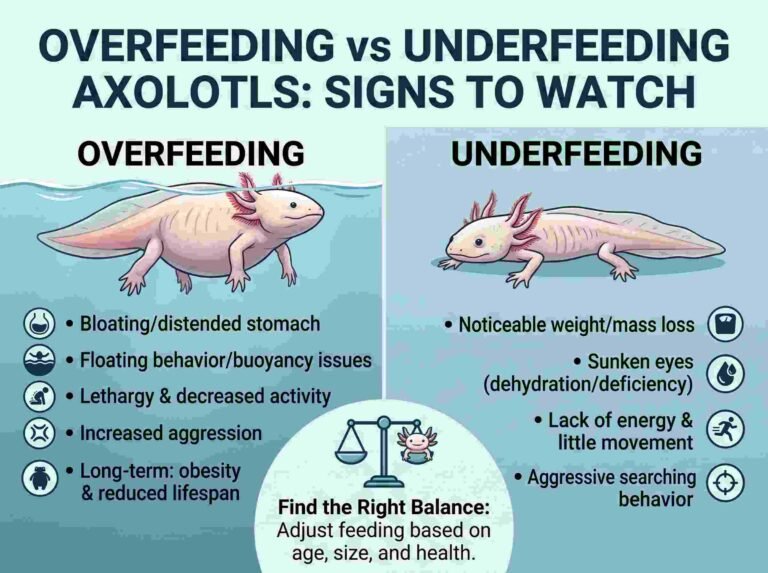
Persistent nitrate accumulation usually reflects more than one maintenance issue. Overfeeding is a common starting point: oversized portions, frequent treats, uneaten pellets, and leftover worms break down into additional waste. Offer only what the axolotl can consume promptly, then remove remaining food with a pipette or fine net. A consistent feeding schedule also helps prevent accidental overfeeding and makes changes in appetite easier to notice.
Consider the aquarium’s biological load and available water volume. Multiple axolotls produce waste quickly, while unsuitable tank mates can add further waste or create stress and injury risks. Even with a suitable filter, a small aquarium provides less dilution, so nitrate rises faster between water changes. A filter that is undersized, clogged, poorly maintained, or recently replaced may also process waste inconsistently. Clean mechanical media in removed tank water, never chlorinated tap water, and avoid replacing all biological media at once, because doing so can remove beneficial bacteria and destabilize the cycle.
Waste may remain hidden in gravel, sand, decorations, caves, plant roots, or filter chambers. Gentle siphoning during water changes can remove trapped detritus without excessively disturbing the substrate. Clean ornaments and chambers with dechlorinated water, and inspect areas where food and feces collect. Decaying plants, algae, medication, a recently cycled aquarium, or a disrupted cycle can each alter waste processing and temporarily change nitrate readings.
Checking Your Source Water (When Tap Water is the Culprit)
Tap water itself may contain nitrate, making repeated rises appear to be a tank-maintenance failure. Test the source water before a water change and compare it with the aquarium reading; a high source result may require different water-treatment planning. Also check test-kit expiration, reagent mixing, sample volume, and timing, using the same technique each time. By comparing feeding, stocking, filtration, hidden debris, source-water, and testing factors systematically, keepers can distinguish a maintenance problem from an incoming-nitrate problem and identify the cause of recurring accumulation.
My Own Troubleshooting Process for Stubborn Nitrates
A sustainable low-nitrate routine begins with observation, not occasional emergency water changes. Test nitrate, ammonia, and nitrite on a regular schedule, recording the results each time. Weekly testing is a useful starting point for an established axolotl aquarium, while newer or heavily stocked systems may require more frequent checks. Test again after adding livestock, changing filtration, treating illness, or observing unusual behavior. A maintenance log can reveal gradual changes that are easy to miss. Record each reading, water-change percentage, feeding amount, cleaning date, and source-water value so rising nitrate or recurring ammonia becomes identifiable as a trend.
Use test results and the tank’s bioload to establish a consistent partial-water-change routine rather than following a fixed calendar without checking conditions. During maintenance, gently vacuum sections of the substrate and remove uneaten food and visible waste, taking care not to disturb the axolotl unnecessarily. Clean filter sponges and other reusable media in removed aquarium water, never directly under chlorinated tap water. Replace only media that is exhausted or damaged, and inspect filter flow afterward. A sudden reduction in flow can indicate clogging, while excessive flow may stress an axolotl.
Using Live Plants to Absorb Nitrates
Live plants can supplement waste management by absorbing nitrogen compounds, but they cannot guarantee that nitrate will remain low. Choose species that tolerate cool, low-light axolotl conditions, and maintain them by removing decaying leaves and ensuring they remain securely positioned. If the tap water already contains substantial nitrate, routine changes may provide limited improvement. Consider a suitable filtration system or a safe prepared water source, while preserving appropriate mineral balance and treating all replacement water with a reliable dechlorinator.
Act promptly when an axolotl shows lethargy, appetite loss, skin or gill changes, unusual floating, or signs of irritation. Repeated ammonia or nitrite detection also requires immediate investigation, even if nitrate appears acceptable. Stable, clean, appropriately cool water is more important than pursuing one perfect nitrate number; consistent testing and measured maintenance provide the strongest long-term protection.